
Like A Rolling Stone by Bob Dylan
Miss Lonely needed to feel electric.


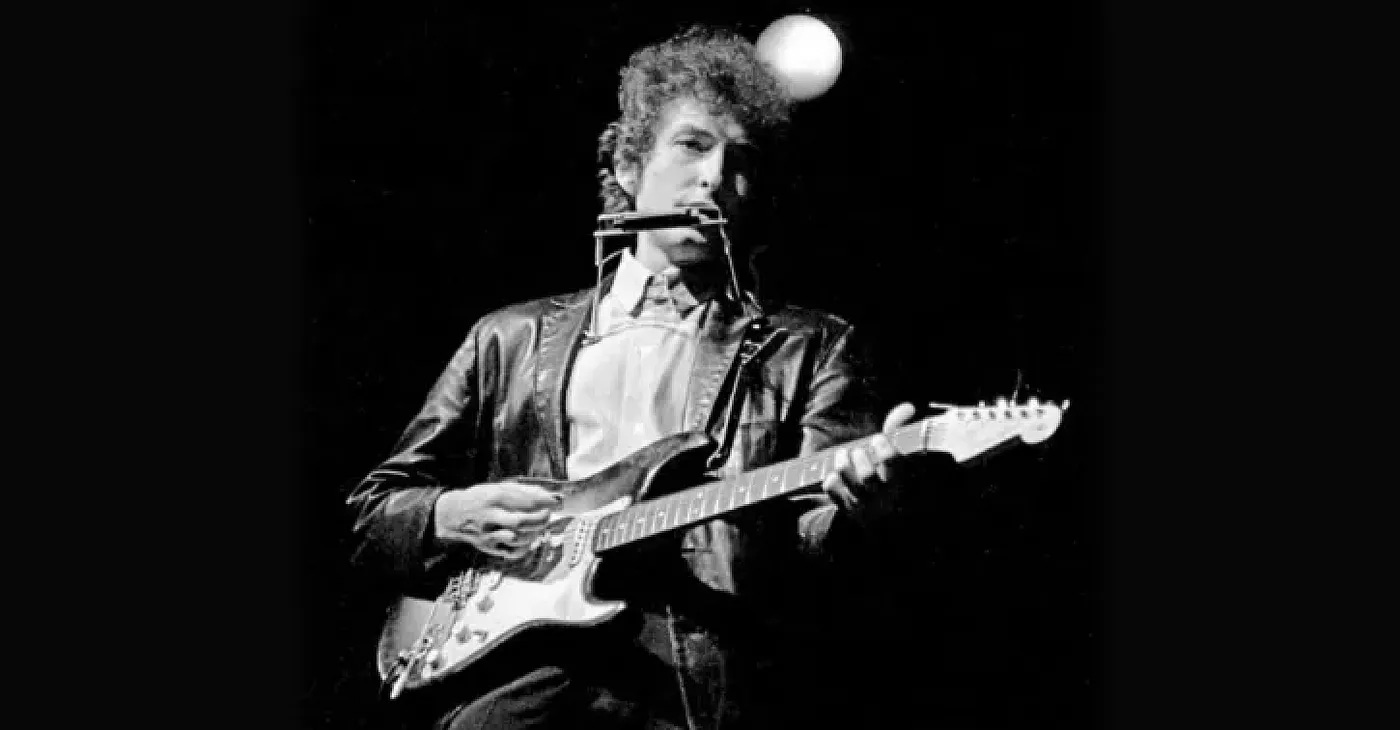
How does one start to understand what people consider to be the greatest song ever written? Well, with patience.
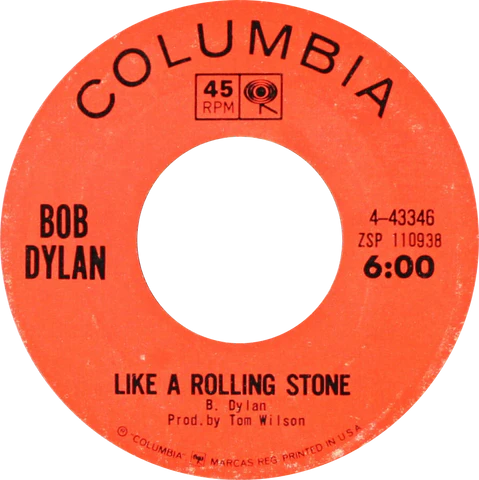
Bob Dylan’s Like a Rolling Stone was first released as a single on July 20th, 1965, with "Gates of Eden" as the B-side. The single came out before the album Highway 61 Revisited, which was released on August 30th, 1965. Like a Rolling Stone is often seen as the most iconic, influential song in rock history.
Highway 61 Revisited marked a turning point for Dylan as he moved from acoustic to electric, surprising some fans with a bolder, more distinctive sound. This shift challenged the expectations in the genre and helped shape the future of folk.
The shockwave of an electric Dylan
Days after the release at the Newport Folk Festival on July 25th, Dylan, backed by the Paul Butterfield Blues Band, divided the crowd by playing with an electric guitar. Many fans were upset and booed because they felt he had left behind his folk roots and "sold out" to rock music.
Dylan played Like a Rolling Stone as the second song in his set, after Maggie's Farm, and before Phantom Engineer. After the boos, Dylan left the stage. He returned to perform It's All Over Now, Baby Blue and Mr. Tambourine Man on his acoustic guitar.
During a televised press conference in San Francisco on December 3, 1965, Dylan was asked by a reporter, 'Do you still sing your older songs?' To which he replied:
“No, I just saw a songbook last night. I don’t really see too many of those things, but a lot of songs in those books I haven’t even recorded. Hmm… I’ve just written them down, you know, put new tunes to them, and they’re published, and I haven’t sung them. A lot of the songs I just don’t need to know anymore, even the ones that I did sing. There doesn’t seem to be enough time, you know.”
At the same press conference, Dylan said "The words are just as important as the music; there'd be no music without the words."
Reflecting on the Newport Folk Festival experience, Dylan stated in an interview with Playboy that he was tired of his acoustic material and considered quitting music altogether. “I was going to quit singing. I was very drained, and the way things were going, it was a very draggy situation… I was playing a lot of songs I didn’t want to play. I was singing words I didn’t really want to sing. It’s very tiring having other people tell you how much they dig you if you yourself don’t dig you.”
Lyrically:
Like a Rolling Stone tells the story of a person's fall from grace and the harsh reality of awakening to this life.
The song is said to be inspired by Edie Sedgwick. She was part of Andy Warhol's Superstars and popularized the mini skirt. Dylan was rumoured to have had a short-lived relationship with Sedgwick around 1965.
While it may not matter who the character is, the lyrics connect to almost anyone in any situation. On the surface, Dylan is singing to Miss Lonely, who is a fictional character.
"Once upon a time you dressed so fine
Threw the bums a dime in your prime, didn't you?
People call say 'beware doll, you're bound to fall'
You thought they were all kidding you
You used to laugh about
Everybody that was hanging out
Now you don't talk so loud
Now you don't seem so proud
About having to be scrounging your next meal"
Dylan’s opening describes someone who once lived a wealthy, carefree life. Now, they look back and question their choices.
During an 1966 interview with Jules Siegel from The Saturday Evening Post titled Bob Dylan: ‘Well, What Have We Here?,’ Dylan stated, “It was 10 pages long... It wasn’t called anything, just a rhythm thing on paper all about my steady hatred directed at some point that was honest... Revenge, that’s a better word. I had never thought of it as a song, until one day I was at the piano, and on the paper it was singing, ‘How does it feel?’ in a slow motion pace, in the utmost of slow motion following something. I wrote it. I didn’t fail. It was straight."
"How does it feel, how does it feel?
To be without a home
Like a complete unknown, like a rolling stone"
The chorus is iconic and I would say legendary song writing, with Dylan stating, “How does it feel / To be on your own, with no direction home / Like a complete unknown, like a rolling stone?” reinforces the song’s central question: What happens when all familiar comforts disappear? The words “a complete unknown” and “no direction home” speaks to a loss of purpose.
The verse, "Ahh you've gone to the finest schools, alright Miss Lonely / But you know you only used to get juiced in it," suggests that Miss Lonely wasted her elite education. She learned no real-life skills.
"Nobody's ever taught you how to live out on the street / And now you're gonna have to get used to it.” This hints at a fall from comfort and status.
“You say you never compromise
With the mystery tramp, but now you realize
He's not selling any alibis
As you stare into the vacuum of his eyes
And say do you want to make a deal?”
Every listen this song deepens. The “mystery tramp” with “the vacuum of his eyes” is the flip side of the secure world she once knew, now symbolizing emptiness and doubt.
The lyric of "And say do you want to make a deal?" reveals Miss Lonely’s current fate of an uncertain future. She is now bargaining and “making a deal.”
Dylan once described Like a Rolling Stone as a “this long piece of vomit, 20 pages long, and out of it I took 'Like a Rolling Stone' and made it as a single.”
"Ah you never turned around to see the frowns
On the jugglers and the clowns when they all did tricks for you
You never understood that it ain't no good
You shouldn't let other people get your kicks for you
You used to ride on a chrome horse with your diplomat
Who carried on his shoulder a Siamese cat"
These lyrics see Miss Lonely fall from privilege. Once, she was surrounded by "jugglers and clowns" who entertained her. They failed to notice the "frowns" and discontented faces of those people. Dylan shows the emptiness of living through others and using people for gain.
The "chrome horse" and "diplomat" with a "Siamese cat" show that wealth and false friends are a facade of power.
"Ain't it hard when you discovered that
He really wasn't where it's at
After he took from you everything he could steal"
Here, Dylan is almost empathetic behind his critique. These lyrics are stark and seem to be viewed as a continuing nod to Edie Sedgwick. They may reference her relationship with Andy Warhol, who was obsessed with creating celebrity personas but often abandoned those whose fame faded.
Dylan never confirmed a link to Sedgwick. But, the parallels between the lyrics and her story with Warhol make it a compelling take. In the Playboy interview, Dylan admitted, "It was telling someone something they didn’t know, telling them they were lucky.”
"Ahh princess on a steeple and all the pretty people
They're all drinking, thinking that they've got it made
Exchanging all precious gifts
But you better take your diamond ring, you better pawn it babe
You used to be so amused
At Napoleon in rags and the language that he used
Go to him he calls you, you can't refuse"
The “princess on a steeple” is surrounded by “pretty people” who believe they “got it made,” yet Dylan warns, “you better take your diamond ring, you better pawn it babe,” hints at how quickly wealth can disappear.
"When you ain't got nothing, you got nothing to lose
You're invisible now, you've got no secrets to conceal"
These lyrics are pure poetry. "When you ain't got nothing, you got nothing to lose" shows how losing everything removes attachment. "You're invisible now, you've got no secrets to conceal" suggests that being unnoticed allows your true self to emerge, free from disguise.
“How does it feel, ah how does it feel?
To be on your own, with no direction home
Like a complete unknown, like a rolling stone”
"Rolling stone" suggests a lack of direction and stability, like Miss Lonely.
Like A Rolling Stone continues to captivate on a global scale. In a 2004 interview with Robert Hillburn, Dylan stated, "It’s like a ghost is writing a song like that. It gives you the song and it goes away, it goes away. You don’t know what it means. Except the ghost picked me to write the song."
Bob Dylan’s handwritten lyrics for “Like a Rolling Stone” sold at a Sotheby’s auction in 2014 for $2 million (USD). At the time, Sotheby’s said it was “the only known surviving draft of the final lyrics for this transformative rock anthem.” Dylan wrote the lyrics on hotel letterhead in mid-June 1965 at the Roger Smith Hotel in Washington, D.C. The near-final draft included doodles and some discarded rhymes, like, “Dry vermouth, you’ll tell the truth.” The famous line “like a complete unknown” is connected to “Al Capone.”

 | A guest post by
|